Sunday, January 28, 2018

2015 Recap

This is the first of three recap posts I have decided to write - one for each year of my unintended hiatus to bring us to today. If you are looking for the other two recap posts, you can find them here: 2016 Recap and 2017 Recap. Then my plan is to fill in with more retroactive posts before I start moving forward.

January

Max and I arrive in Addis on New Year’s Day, after having “celebrated” New Year’s Eve 2015 on board of a Turkish Airlines flight to Ethiopia. I somehow imagined ringing in the new year in the air with Champagne, courtesy of the airline and perhaps festive food. Yeah, that only happens in my dreams. The flight is crowded and pretty dreadful and the mood is, well, the opposite of festive. Paul, my Mom, Nia and the cats arrived in Addis a couple of days before Max and I and have already taken care of some of the basics, which is nice. We spend the rest of the month getting settled at home, at school and at work, figuring out where to go for various things, meeting people, exploring Addis, learning about Ethiopia and Ethiopian culture, enjoying the nice weather and one of Ethiopia’s greatest delights, Ethiopian coffee. Speaking of coffee, we arrive in Ethiopia during coffee harvest season, so we get to harvest, dry, roast and experience our own home-grown coffee from the two coffee plants growing in our back yard, which is pretty darn fantastic.

IMG_1845

Also, we like our new yard so much that we decide it’s only fair to share it with our cats. So we start the short-lived cats-on-leashes-in-the-yard experiment, with mixed results. Why on leashes, you may wonder? Well, because our cats are known escape artists. And why are the results mixed? Two of reasons: a) our cats have always been indoor cats and the surfaces they find acceptable are hard flooring, carpet (loved for the scratchability), furniture and litter. They aren’t quite sure what to do with the grass. It looks inviting but walking on it feels weird. Turns out the comfort of known surfaces can’t be beat. I guess the grass is not always greener…  and b) after a few outings, they end up with worms and deworming them is about as fun as it sounds, so that’s the end the cats-on-leashes experiment. But we tried it and here’s a picture to prove it.

IMG_1840

February

Max turns four in February but because we are new at post and don’t know many people, we mark the occasion quietly at home. A few days later we celebrate our 18th wedding anniversary in true Foreign Service style, by romantically unpacking our belonging as we get a shipment every weekend in February – first our UAB, then our HHE (which has been in Belgium since we left Delhi, waiting for us to get to Addis), then our consumables and lastly, our car. Getting our car is a huge deal as it means we can now venture beyond the walking-distance area. Game changer! Also, we luck out with our stuff arriving during the dry season thereby avoiding water damage and mold.

IMG_0334Happy Anniversary Unpacking Day, Honey!

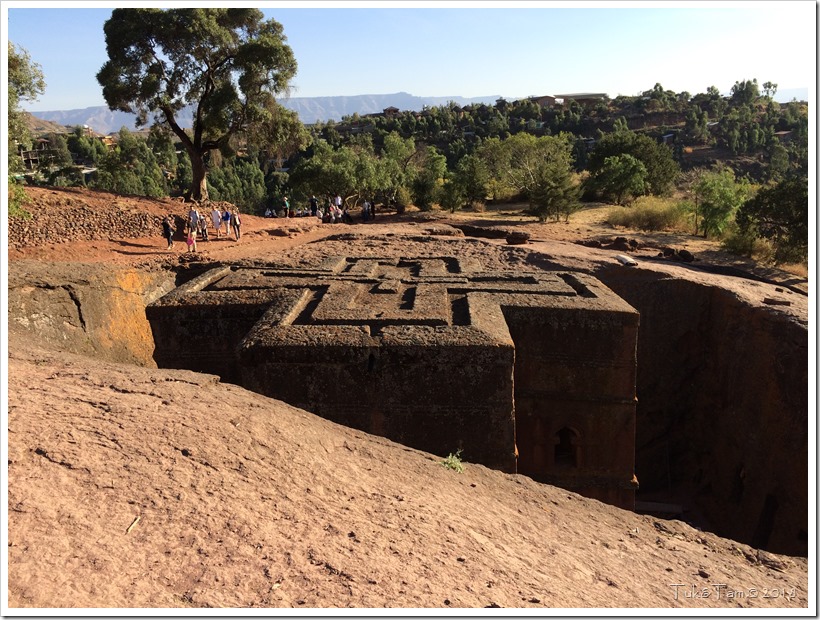
We  take two great embassy-organized trips outside Addis in February – one to Lalibela, a favorite pilgrimage site for Ethiopian Orthodox Christians,
IMG_0187

and another to Wenchi Crater, which as the name implies is a lake in a crater.

IMG_0350

March

We were so happy with the two embassy-organized trips we took in February that we take another one in March, this time to Debre Libanos, a beautiful church with colorful stained glass windows:

IMG_2428

and Portuguese Bridge, located at the edge of the Blue Nile Gorge:

IMG_2518

Between Debre Libanos and Portuguese Bridge we also run into some monkeys, much to the kids’ delight:

IMG_2451

Last but not least, in March I visit Ya Bunna, a small specialty coffee company in Addis, where I learn a ton about coffee and fall in love with medium roast and Yirgacheffe coffee.

IMG_2572

April

We celebrate Easter at the Embassy and at home with egg hunts

IMG_2575

and egg fights.

IMG_2610

Nia plays the trumpet in a concert

IMG_0606

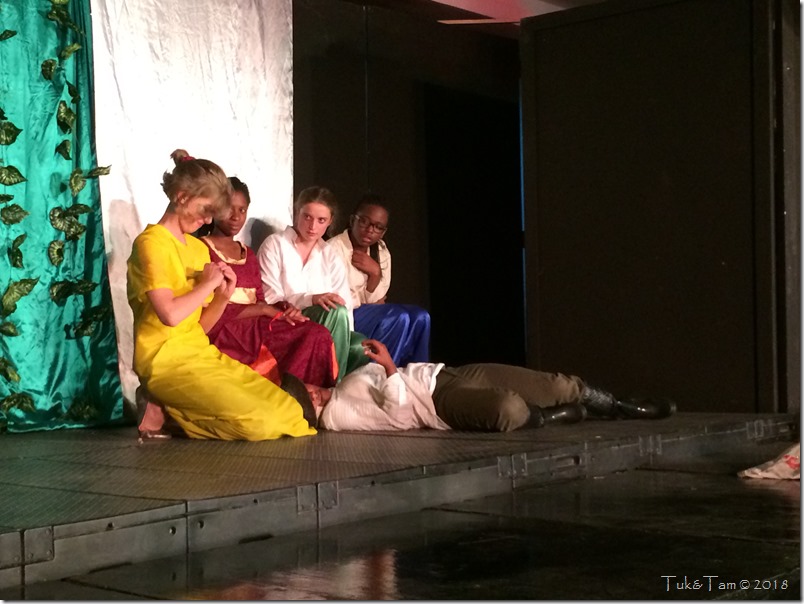
and performs in a Shakespeare play.

IMG_0666

May

May is wonderful. Summertime is always busy for GSOs and I know I won’t be able to take time off but we also hear that POTUS (President of the US, at the time Obama) will visit Addis in July. My bosses encourage me to take time off in May before all hell breaks loose. Unfortunately, the kids are still in school in May, so we can’t take a proper vacation but there are holidays at the beginning and end of the month, so we take two awesome short trips – one to Istanbul, Turkey,

IMG_3013

and the other to Cape Town, South Africa.

P1010543

Both trips are fantastic but we have been to Istanbul before, so we know what it’s like. That doesn’t mean we don’t thoroughly enjoy the sights and the delicious food. Cape Town on the other hand, is new to us and we fall in love with it. We see ostriches, penguins, cheetahs, go up Table Mountain, and to the beach, have nice wine at a winery, and all kinds of delicious food. We would love, love, looooooove to be posted in either of those places some day.

June

School slowly winds down in June and the rainy season starts. The rains bring these critters:

IMG_1258

That’s right – termites. They swarm like crazy and shed their wings all over our yard. Some get inside the house driving the cats absolutely bonkers. The first time we see them, we freak out because we used to live in Florida and there termites can destroy your house. We are told that their African cousins, do not cause damage like the ones in Florida. Whew!

This particular rainy season is very wet in Addis but there is a serious draught elsewhere in Ethiopia, leading to famine in several parts of the country. Very sad situation and my colleagues at the Embassy, from USAID, State and other agencies work very hard to bring aid and distribute it to those most affected.

But generally speaking, I am not a fan of the rainy seasons in Addis because it’s cold and there is very little for the kids to do. Most kids leave Addis for good or just for the summer, either way they aren’t there for play dates. There are summer camps but only for two weeks which is not enough for us because we are stuck in town all summer. The kids are bored. We try to come up with stuff to do with them. One day I take them to Sabahar, a really cool organization run by a Canadian woman who teaches homeless and destitute Ethiopians to spin silk and cotton thread and weave it into beautiful scarves, tablecloths, bed covers, bags etc. Their items are lovely but not cheap, however, the cause is good, so a lot of expats shop there. Sabahar is located not too far from where we live and they have silkworms! The kids love seeing the silk worms and the women spinning, especially Max, who decides he wants silkworms as pets.

IMG_0944IMG_0947

Another day we go to see the giant tortoises that live in the yard of the kids’ school.

IMG_0979

I am experiencing serious cheese issues. We bought some cheese in South Africa but it’s gone in no time. Addis is not the best place for cheese lovers. There are some local cheeses but they are more like cottage cheese and while they work for Ethiopian food, you can’t use them as a substitute for other cheeses we are used to. Imported cheeses are available but very expensive and almost always frozen and let me tell ya, defrosted cheese is just, ahem, suboptimal. I decide I have had enough defrosted cheese and take matters into my own hands making my own Mozzarella.  It’s both easier and better than expected. I use this recipe, in case you want to try it. You do need rennet (I used tablets) and powdered citric acid, both of which are available on Amazon but other than that, it’s no biggie.

IMG_0921

I then use my home-made Mozzarella on home-made pizza. I make my own dough, using this recipe. Both the cheese and the dough are approved by my picky eaters. I teach our housekeeper how to make cheese and pizza dough, so for the rest of our time in Addis, we are pretty OK in the Mozzarella and pizza department.

IMG_0935

July

July is a whirlwind. My colleague Tara arrives in Addis. She and I met a few months earlier in GSO training in Washington. We don’t know it at the time but we will become almost inseparable by the end of our time in Addis. I pick her up at the airport and on the way to her house tell her POTUS is coming to town in a few weeks. She freaks out a little because she knows it means a ton of work before she’d have a chance to get her bearings but we roll with it. Before that, however, I have a big party to plan. I’m in charge of the official 4th of July event at the Embassy. I have been working on it since I got to Addis in January and most of the work is already done. The beer and wine arrive just in the nick of time but the event is great and both Ambassadors (we have two in Addis – one to Ethiopia and the other to the African Union) like it. Tara helps me on game day. Here we are at the end of the event with James Dean and Frank Sinatra. Oh, I almost forgot – the theme of the event is Old Hollywood, hence the cutouts.

4th of July 2015.jpg

With POTUS coming soon, there is no time to rest. We have to immediately jump into preparations for the visit, which is a huge challenge. A visit of that magnitude is a challenge for any embassy but some embassies are in a better position to handle it than others. About a thousand people from various US agencies come to Addis for the visit. Just housing them in decent hotels, feeding them, getting them water, communications, vehicles, and tents to protect from the rain during outdoor events is a logistical nightmare. I’m in charge of procurement and property. I negotiate with hotels and car rental companies to make sure there are decent places for everyone to stay and cars to take them where they need to go. There are certain requirements hotel rooms must meet for a visit like that. And there just aren’t enough rooms in Addis that meet our requirement, so we have to get creative with some groups. Right before the POTUS visit there is a major international development conference in town. We have a contract with a car rental company to rent vehicles from them as the embassy vehicles are not enough. Except when we go to get the vehicles, they aren’t there. The people who had them for the conference, have not returned them as previously agreed. So we scramble to find a solution. Some of the drivers we hire from outside aren’t very professional - they don’t always show up when and where needed, or different drivers show up, all of which is unacceptable because the schedules, movements and security for a POTUS visit are extremely tight. Thankfully, the major kinks happen with the advance team (people who arrive to help a post with a visit a couple of weeks in advance, hence the name) and we iron them out by the time the President lands. My staff is constantly running around town looking for all kinds of items various teams need for the visit. We also have an issue with the flags. At one of the venues (the Presidential Palace) the required flags have different dimensions than what we already have, so we need to have some made. We find a company that says they can do it. I offer to leave them a flag sample to make sure they get the colors right. They say they know our flag. Except when I go to pick up the flags, both the colors and the dimensions are wrong and have to be redone. I am stressed out and frustrated and so is the vendor as we are running out of time but in the 11th hour as the President is touching down, they finish the flags and it all works out. I remember waiting at the vendor for the flags to be finished with both of my kids in tow because it’s the weekend and we don’t have a nanny on weekends and Paul is already at the airport supporting the arrival. The kids and I go to the meet and greet with the President at the Embassy. Max gets some nice shots with the President. Nia and I, being tall, have to be further back and only get pictures with half of our faces in them. But I am not complaining as I get to go to the President’s Speech at the African Union and that’s all kinds of awesome.

11035980_10153542422824359_3870768177259334853_o

August

Most of my colleagues relax after the visit and take time off. Not me. We had to stop accepting new arrivals at post in July because of the visit and now have something like 30 new colleagues arriving in the first week of August because the school year at the International Community School starts in early August and colleagues with kids arrive in time for the kids to start school. That means the Property team I’m in charge of has to make sure the 30 houses for the new people are properly furnished, cleaned and prepared for occupancy. We had already been working long days and weekends for the POTUS visit but have to keep going to accommodate the new arrivals. Meanwhile, the other team I’m in charge of, the Procurement team, is working on End-of-Year procurement, which is hard to explain but let’s just say that due to how the State Department is funded, a large percentage of the purchasing for the year happens in August and September. So I was busy, busy, busy. And exhausted.

September

We have four holidays in September, one American (Labor Day) and three Ethiopian (a Muslim Eid, Meskel and Ethiopian New Year), which is great because I really can use some rest. Ethiopians have their own unique calendar and time and celebrate the New Year in September (their calendar is 8 years behind ours). The largest Ethiopian holiday, Meskel (celebrating the finding of the true cross) is also in September. We have an annual event for our vendors at the Embassy for Meskel. Here I am at the event with vendors. I made the tunic myself out of gold-thread Ethiopian fabric I found at Shiromeda, a large market for traditional Ethiopian fabrics and clothing near the Embassy. Tunics are not big in Ethiopia but I had fallen in love with them in India for the awesome coverage they provide, so the tunic is a marriage of Indian style and Ethiopian fabric. I get a lot of compliments on it.12039362_10153718684229359_6421808682064343085_n

I also try kitfo, an Ethiopian spiced raw beef dish, for the first and last time at this event. I am a little tentative (left picture below) at first but it tastes very good (right picture), though my tummy does not feel so good the next day, so I stick to cooked food after that.

16112552_10155006080284359_5440965994381382892_o12033054_10153718603939359_4104623001309569391_n

October

Finally, I get a breather and we escape to lake Langano, where our Embassy (as well as others) has a campground, for a few days. We see millions of flamingos, camels, and ostriches.

P1020318 (3)

November

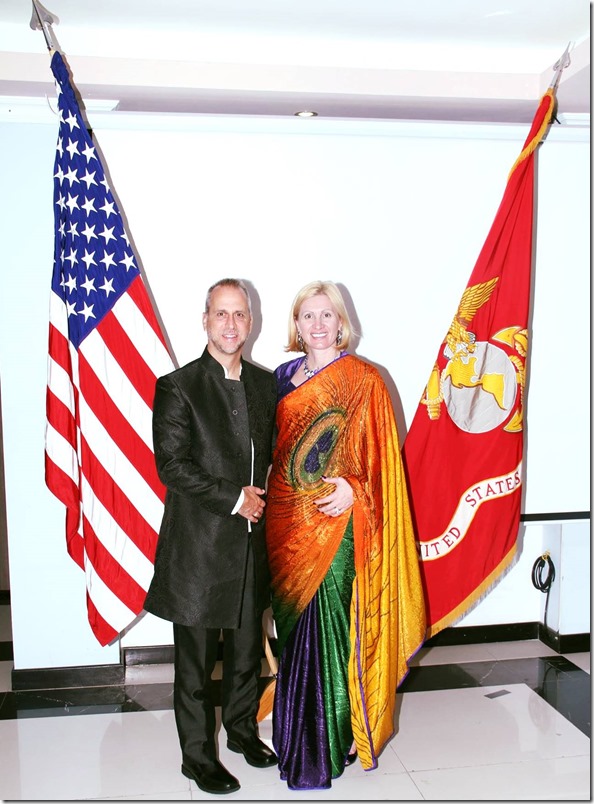
The annual Marine Ball is in November. We both wear Indian clothes, because why not. I had made Paul a wonderful Indian suit and bought myself a saree (one of about 30) at the very end of our time in India and I hadn’t had a chance to wear it yet.
12273684_10153833216244359_3140078963599534594_o

Nia turns 12, which we celebrate with a sleepover. We stay home for Thanksgiving and invite three Peace Corps volunteers and our nanny/housekeeper Sara, who make it special (sorry for the blurry picture).

12310573_10153850487749359_155432629842723183_n

We have turkey and pumpkin pie from scratch:

12308653_10153850487769359_6252418428071282896_n12294908_10153850487864359_845540303492472944_n

December

We travel to the US for Christmas and Paul’s Dad’s 90th birthday and celebrate both with Paul’s family. Here’s a picture of Grandpa’s birthday at a German restaurant in Washington.

Grandpa 90th

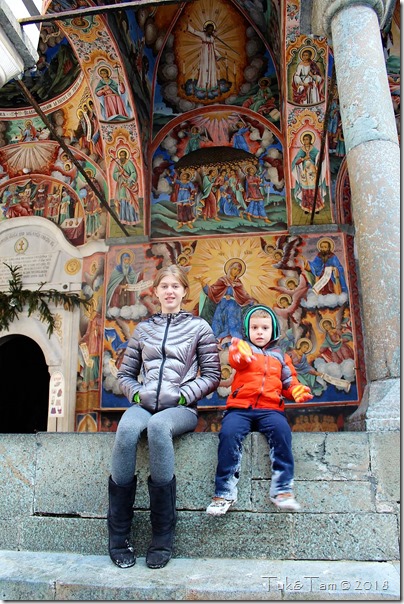
Then we go to Bulgaria and celebrate New Year’s with my family.  Here are my parents and the kids at Rila Monastery:

12493597_10153963896259359_1447334907297687611_o12604666_10153963895814359_5361354752999933686_o

Sunday, December 17, 2017

Five Great and Five Not So Great Things about Serving in Addis

This post is long overdue and it is similar to the one I wrote about India five years ago. My family and I arrived in Addis in January, 2015. My family left in July, 2016, while I had to stay until April, 2017.

Before we moved to Addis, we did a lot of research and talked to a lot of people who had lived there. Many of them told us Addis was Africa light. We and the majority of our colleagues, who lived there around the same time as us, did not find that to be the case. That is not to say that there are no nice things about Addis or that we didn't have good experiences there. We just found it hard for our family. We also had friends who had lived there years before and came back when we were there. Those friends said it had changed a lot, and not necessarily for the better. There was so much rubble and new construction, that the place was almost unrecognizable. Perhaps it's these growing pains that made it a hard place for us but without further ado, here are my five faves and five not so faves about Addis.

On the plus side:

1. The coffee (and the sweets that often go with it) - Yes, it's true, Ethiopian coffee is amazing. You can find anything from Ethiopian style (sweet or salty) to fancy caramel macchiatos all over town for a fraction of what you would pay in the US. We actually lucked out and had two trees already growing in our yard, which was pretty fantastic. We got to harvest, roast and drink our own coffee. How cool is that?

2. The school - The International Community School in Addis is very good. Both Max and Nia liked it, as did the children of most of our colleagues. Because Addis is the seat of the African Union and the UN Economic Commission for Africa, there are a lot of expats in the city, so the school is truly international. It has nice grounds with a decent amount of green space. The teachers are generally attentive and caring and the community tight-knit. There are many activities associated with the school during the school year and that is one way to meet people. Because there are not a lot of other nice places for children to hang out in Addis, we often went to the school - it's clean and has nice playgrounds for the kids to run around, and reliable internet for the parents. The school was experiencing a lot of growth and there was an expansion/construction project going on around the time we left.

3. The weather - Addis weather is wonderful, for the most part. It never gets too hot or too cold (rarely more than 25 C or down to freezing). There are a couple of rainy seasons - little rains and big rains, they call them, but the little rains usually only last about two weeks or so. The big rains are usually between May and late October and can be gloomy and cold-ish but even then there are usually a few hours of sunshine during the day.

4. Culture and places to visit in Ethiopia and beyond - Ethiopia has a long and interesting history. It is predominantly Ethiopian Orthodox (though there are Muslims as well as a few other religions) and that permeates all aspects of life. The majority of Ethiopians fast (eat a vegan diet) more than 200 days a year. Ethiopians are very proud of the fact that Ethiopia was never colonized and that it is the only country in Africa with its own alphabet. There are many different ethnic groups in the country, each with it's own language and culture, so it is fascinating to travel and see them. The geography of the country is pretty diverse. It is land-locked but some of the lowest and hottest areas of the world are in Ethiopia as well as some scenic mountains. We got to visit Lalibela and the Lake Langano area as a family. Then I travelled through the Blue Nile Gorge to Bahadar and Gondar for work and had the rare chance to visit the Danakil depression and see the Erta Ale volcano and the Dallol salt flats too. Addis also happens to be an airline hub for Africa and beyond. Ethiopian Airlines is a government-owned airline but they are investing in it, so they have newer planes and are constantly developing new routes. This means you can fly direct to most places in Africa and Europe but also the Middle East, India, China, Japan, Thailand, etc. We took advantage of that as much as we could and went to Turkey, Egypt, Kenya, Tanzania, South Africa, and the Seychelles. I also climbed Mount Kilimanjaro, the highest point of Africa and had an incredible experience. I have only blogged about our trip to Lalibela so far but am hoping to blog about the other trips in the near future.

5. No Malaria in Addis - Not having to worry about malaria is great but that's only in Addis, because it's high (8,500+ ft above sea level). Most other places in Ethiopia have malaria, so we had to take malaria medication when we travelled outside Addis.

On the minus side:

1. Political issues - I am not going to spend a lot of time on this but it does put a damper on life. While I was there, we experienced unrest, clashes between protesters and the government, which culminated in the government declaring a state of emergency, during which there was heightened military and police presence and for a couple of months we (diplomats) were not allowed to leave Addis.

2. Internet - If you live in Ethiopia, you get to experience some of the most expensive and unreliable internet services for in the world. This is not an exaggeration. The company that offers it, Ethiotelecom, is a government-owned monopoly. Assuming you will have enough connectivity to work from home is not realistic. Leading up to and during the state of emergency, there were periods when we had no phone or internet connections. We had internet outages that lasted weeks, some colleagues had to go without for months. And the Ethiotelecom kept billing us... You learn to deal with it but it is far from ideal.

3. Driving in Addis - Ethiopia has one of the highest rates of motor vehicle fatalities in the world. I drove to work every day during my last year at post and it was nerve wracking. Addis has the hardest driving conditions I have ever experienced. Admittedly, I did not drive in Delhi because we lived on a compound, which was across the street from the Embassy, but I found traffic in Addis to be worse. Sure, there were more vehicles, people and animals on the roads in Delhi but there seemed to be more of a method to their madness there. Addis traffic is a crazy free-for-all. There's just so much unpredictable behaviour on the part of both pedestrians and drivers, it's uncanny. Many of the drivers use a mild narcotic, called chat or khat, which is legal in Ethiopia, and their driving gets progressively worse throughout the day. Most Ethiopians do not consider beer or wine alcohol and that definitely contributes to the insanity. The pedestrians are unbelievable - they often run into traffic without looking and with their backs towards traffic. They often exercise, play, sleep, make out in the middle of the road. The streets are poorly lit at night and it is almost impossible to see what's going on. When we got to Addis, there were only a couple of traffic lights. They installed quite a few while we were there but they didn't work quite right. The timing was always off and they created more problems than they solved. Ethiopians treated traffic lights as optional, especially at night when I was usually the only one waiting for the light to change. Everyone else just kept going. I really tried to keep my cool while driving but have to admit that driving in Ethiopia made me a honker (and I hated honkers with a passion prior to that!) and a total potty mouth. I am still in disbelief that I left Addis without getting into a car accident - that is rare!

4. Health Issues - you have to get quite a few shots before you move to Addis but still, the first six months of living there can be rough. It took us a while to get used to the altitude - we had some breathlessness, sleeplessness, respiratory and other similar symptoms. Gastro-intestinal issues were common. You could get sick even at some of the best restaurants in town. Only one lake in the country (Langano) was safe-ish to swim in. The rest all had shisto and/or crocodiles and other interesting creatures living in them. There was intermittent cholera in Addis and around the country but even without cholera, the tap water was unsafe to drink or cook with, so we had to distil it for drinking and had to wash fruit and vegetables in bleach before consuming them. Pollution in Addis is not as terrible as it is in Delhi but then again Addis is about five times smaller than Delhi. Most of the vehicles on the road are old (including a huge number of 1980s Soviet Ladas, which was quite surreal!) and spew an inordinate amount of exhaust in the air. One of the projects I worked on while I was in Addis was procuring and installing air quality monitors for the embassy and the school to measure exactly how bad the air is and it is not good. If you are curious, you can check current air quality readings in Addis here. Sometimes, there are no readings because the internet is so unreliable. In addition to old polluting vehicles, there is a lot of dust in the air from all the demolition and construction projects all over town.

5. Safety - the housing in Addis was not great. Our house was not new and needed work, so we often had plumbing, electrical and other housing related issues. You may think, the government is providing her housing and maintaining it and she is complaining, while a lot of people in Ethiopia live in shantytowns. While that is indeed very true, our housing elsewhere is substantially better. But because the African Union and UN Commission on Africa are in Addis, there are a lot of expats competing for the same limited pool of adequate (and overpriced!) housing. Most of the roads are bad and deteriorate significantly during the rainy season. You just learn where the worst potholes are and try to avoid them as best as you can. We were not allowed to drive after dark outside Addis - it was just not safe. In Addis, you never went anywhere after dark where you hadn't been during daylight because you could destroy your car, that's how bad some of the potholes were. While the country was otherwise safe-ish, there are pick-pockets and scam artists who prey on foreigners. Several of my colleagues had their phones and purses stolen in broad daylight.

So there you have it - the five highlights and lowlights of living in Addis. Agree, disagree, have something to add? Let me know in the comments.

Saturday, December 16, 2017

Happy Holidays from the Worst Blogger Ever!


I know, I know, I know - I haven't blogged in forever. It was a very long, unplanned, unannounced hiatus, I guess. If you were one of my few readers, I am sorry! Of course, I have excuses but who cares, right? The point is I missed blogging and have been thinking about going back to it. But the longer you go without blogging, the harder it is to go back. I have started many posts in my head that never saw the light of day for one reason or another. It has been so long now that I am not sure where to begin. Perhaps one way would be to write a catch up post (or two) and then maybe a few retroactive ones to bring us to today somehow and then move forward from there. 

Sounds like a halfway decent plan, no? I have nothing better, so we'll have to go with that for now.

But today, I just wanted to say Happy Holidays! Here's hoping you and yours are well and that your 2018 is so awesome that it blows you away!


Friday, April 10, 2015

Love and Marriage

So we are watching Wall.E, the movie tonight. Max and I are snuggled on the couch and Nia and Paul are sitting in the armchairs nearby. Max is starting to understand that Wall.E is falling for EVA. All of a sudden he says to me:

I love you, Mommy!

Me: I love you too, Sweetheart!

Max: Mommy, will you marry me?

Me: But Max, I’m already taken.

Max: OK, maybe tomorrow…

Sunday, March 29, 2015

Ya Bunna (Coffee)

Yesterday, I visited Ya Bunna, a small specialty coffee company in Addis. The trip was organized by the Community Liaison Office of the Embassy (again) and I almost missed it. My ride didn’t show up and Paul is in South Africa for work, so I had an uncomfortable decision to make. Do I give up and stay home or do I drive?

You see, we had just gotten our car the previous weekend and had driven it twice – once to bring it home and another time to take Max to the doctor because he was sick. Paul drove both times. But now he wasn’t home, so I couldn’t get him to give me a ride. I had contemplated driving in Addis, some day, maybe but not for a while. Because driving in Addis is a total free-for-all and because I am a chicken, that’s why. All of a sudden I had to drive or I was going to miss this trip and I really wanted to go.

“Do one thing every day that scares you,” I remembered reading somewhere. Driving fit the bill, so off I went. I took the ring road, which is pretty much the only route I felt somewhat confident about. It’s a highway, kinda, except people do crazy stuff on it like jumping the fences and crossing without looking, exercising, sleeping (that’s right, often with body parts sticking out in the lanes), driving their donkeys, sheep, goats or cows down the road, playing soccer, driving with unsecured cargo or cargo three times as high as their vehicle  - you know, fun stuff like that. So yeah, driving was a white knuckle, nerve-racking experience but I am happy to report that I didn’t wreck the car and I didn’t kill anyone, so I call it a success. Plus, I got to do go on the trip, which was pretty cool.

Ya Bunna is a relatively new husband-and-wife operation. The company is very small but they are truly passionate about coffee in general and especially about Ethiopian coffee, so it was fascinating to talk to them and taste their coffees.

IMG_2560 The owners of Ya Bunna

I have to admit I had a very selfish reason for going. There are two coffee trees in our back yard and we have been harvesting and roasting the coffee but didn’t really know what we were doing, so I wanted to learn to do it right. And learn I did. A lot. So I thought I’d share what I learned here:

Apparently, the only coffee variety you are allowed to grow in Ethiopia is Arabica. This is where Arabica originated. Robusta, the other well-known coffee variety, is grown elsewhere in the world and in Africa (in places like Sudan and Rwanda). Robusta is hardier and has a higher caffeine content but its flavor is not as good, so Arabica is often added to it to improve the flavor. There are many different types of Arabica grown in Ethiopia and their flavor varies depending on which part of the country they are grown in.

You harvest the coffee berries when they are bright red. If they are not quite ripe enough, the coffee will taste bitter, if they are over-ripe, it will have a sweeter fermented taste. People who can’t afford to buy actual coffee, make “coffee” out of the dried fruit (or even the leaves) instead which costs a lot less than coffee but also packs a caffeine punch. I recently tasted the the coffee berries in our back yard and they actually taste very good. They are sweet but not overwhelmingly so. They taste kinda like cherries but not as sweet. I am going to try making “coffee” out of the berries with the next batch of coffee I pick in my yard. But I digress…

So, after you harvest the coffee berries, you either peel the fruit pulp, wash the coffee beans and sun dry for about two weeks or you sun dry it without washing, (fruit and all). The washed coffee is more expensive than the dry coffee but the dry coffee is a little sweeter because it dries with the fruit pulp on it. Most of Ya Bunna’s coffee is dry.

Coffee is harvested between November and March to avoid the rainy season, which makes it impossible to properly sun dry the coffee. It takes an average coffee plant 3-5 years to bear enough fruit to be viable and the coffee is the best  around the 6th-7th year. Coffee is a tropical plant. It likes shade and high altitude but it doesn’t like frost (which happens sometimes in the highlands of Ethiopia).

Apparently, with coffee, as with other things, size doesn’t matter, ha! A lot of manufacturers worldwide sort coffee beans by size but size has nothing to do with the quality or flavor of the coffee. It’s where and how it’s grown and how it’s roasted that matters. Also, dark roast makes all coffees taste pretty much the same (burnt). In order to appreciate the flavor of coffee or taste the difference between the various different kinds, you have to get medium roast. Coffee manufacturers sometimes dark roast their coffee and/or add cardamom and other spices in an effort to improve/mask its flavor.

In Ethiopia, you have to have an export license (which is hard to get) to export coffee. The best coffee is grown for export and is used to generate foreign currency. You are not allowed to sell export grade coffee in Ethiopia. There is a concern in Ethiopia that chat (khat), a mild narcotic, may displace coffee cultivation because it pays better and the demand for it is growing faster than that for coffee.

What Ya Bunna does is not rocket science but they do have a scientific approach to it. The husband immigrated to the U.S. with his family at the end of the Derg Regime (a totalitarian government which ruled Ethiopia between 1974 and 1987). He finished high school and got his Bachelor’s and Master’s degrees in the U.S. He is a biochemist by training and brings that background to the making of coffee. Ya Bunna buys coffee from Ethiopian growers and then sorts it meticulously separating under-ripe beans and beans damaged by frost or pests. They end up with three grades coffee.

IMG_2523A Ya Bunna employee sorting raw coffee beans from a farm in Wollega.

The lowest grade coffee (the under-ripe, frost- and pest-damaged beans) they never even roast. They sell it raw on the local market where there’s a lot of demand for it. Ethiopia is a poor country but coffee is so ingrained in the culture that everyone drinks it all the time. There are coffee stands all over the Ethiopia, where the raw coffee beans are roasted in a pan over a brazier, ground by hand and made in special clay pots over the brazier. Of course, there are also fancy cafes with expensive espresso machines and high-end grinders but the vast majority of people drink brazier coffee made either at home or on the street. They are not as concerned about the quality of the beans – they need the caffeine and even the lowest grade coffee provides plenty of that for very little money.

IMG_2526 Ya Bunna’s three grades of coffee (raw) – first grade loose in the bucket, second grade is at the top of the picture and third grade in the bottom left (the picture is not great but you can kinda see the dark and imperfect beans).

The second grade is good coffee but not great. It may have slightly under-ripe or over-ripe beans. It is usually bought by the hotels in Addis. The first grade contains only the very best beans and it goes for export. While other coffee companies in Ethiopia make coffee blends, Ya Bunna specializes in single-origin coffee. They are all about flavor and get really excited about the mocha flavor of the highly-prized Harrar coffee (which is hardest to get), the slightly spicy and citrus-y profile of Sidamo coffee, and the creaminess of Tepi cofee. And because flavor is so important to them, all their coffees are medium-roast.

IMG_2546And this is what medium roast coffee looks like (sorry the picture is a little blurry).

Ya Bunna roasts their coffee in a gas coffee roasting machine from Turkey. Gas heats the beans evenly and the result is uniformly roasted beans. They have their eyes on a U.S-made roasting machine but it is substantially more expensive and for a larger scale operation, so they will have to grow the business before they can afford it. Their current machine has a spinner, so the coffee is constantly moving while it’s being roasted, which also helps roast the coffee uniformly. Coffee expands when heated and makes a popping sound similar to popcorn. Each bean pops twice - once at about 172 – 174 Celsius (which is the beginning of the medium roast) and a second time at around 187 Celsius (the beginning of the dark roast).

IMG_2567 Checking the coffee to make sure it’s not getting too dark.

I have never been a coffee snob but I am afraid I will become one after my tour in Ethiopia. I still drink my giant cup of instant coffee with milk (no sugar, no water) in the morning but I have grown to appreciate the awesome coffees offered at the nicer cafes in town. I was never a dark-roast fan but now I am definitely a medium-roast convert. Something that I sort of knew but Ya Bunna reminded me is that it’s best to buy beans as ground coffee doesn’t last very long (only about 3 months). Beans last about 6-9 months, if stored well.

If you want to roast coffee at home, you can do so in a pan over a burner but you have to stir the coffee constantly and watch it closely to make sure it doesn’t burn. I have some of my home-grown coffee drying right now and am looking forward to roasting it in about a week. I get to grow, harvest and roast my own coffee and now I know how to do it right. How cool is that?!!!

So, all in all, I had a wonderful time at Ya Bunna. They were preparing to go to the Specialty Coffee Association of America trade show in Seattle in a couple of weeks and are already talking to U.S. companies about exporting to the U.S. They are thinking about solidifying their brand and eventually buying a coffee farm. I am excited about their future and look forward to seeing their coffee in the U.S.

I will leave you with one parting thought. I asked the owner what’s the best coffee in the world. He said it depends - some people like earthy flavor, others like spicy and citrus-y. Some, like many Southern Ethiopians like their coffee sweet, while the highlanders like it unsweet. He said his personal favorite is Bale coffee but again it’s in the taste buds of the drinker. He said that to determine if a coffee is good, you should order a single shot of espresso. If you taste buds get excited, it’s good coffee. (He also said that in a good shop espresso, will never be dark-roast).

Thursday, March 19, 2015

Lalibela

I have been meaning to write about our trip to Lalibela but we have been getting our shipments and were busy unpacking, so I had to set blogging aside for a while. Our UAB (Unaccompanied Air Baggage – 700 lb of stuff from the U.S.) came the day before we went to Lalibela. The following Friday came our HHE (our largest shipment – 7200 lbs of stuff from India). Our Consumables (food, cosmetics, cleaning products, etc.) came the next Friday. The Friday after that was when our car made it to Addis but we didn’t get to take it home because it had to undergo a bunch of administrative mumbo-jumbo. We did see it though and we can’t wait to finally get our hands on it. Maybe tomorrow, we are told. So we have been busy unpacking a boatload of boxes. We are not completely done but the house is livable and I really need to blog about Lalibela.

So, in early February, we took a CLO trip to Lalibela. CLO is the Community Liaison Office at the Embassy and they organize various activities for the Embassy employees and their families, including trips. Since we don’t have our car yet, we have taken every CLO trip since we got here. Lalibela was our first CLO trip in Ethiopia and our first one outside of Addis.

Lalibela is located about 700 km/435 miles north of Addis but the terrain is quite rough and it takes a couple of days to get there by car, so we flew. I hear there are direct flights from Addis to Lalibela but we took the scenic route. We flew through Bahir Dar on the way there and through Gondar on the way back. A direct flight would have been preferable but flying through Bahir Dar and Gondar gave as an opportunity to see more of Ethiopia. We got to see lake Tana, the largest lake in Ethiopia and headwaters of the Blue Nile. You can see it on the map below located between Bahir Dar and Gondar.

Ethiopia is quite mountainous and it takes seeing it from the air to understand why it was isolated for a long time and why it was never really colonized. The Italians tried but weren’t very successful. We were there during the dry season and things looked quite parched.

IMG_1882
IMG_1868 
There were tiny villages, made up of tukuls (traditional round houses with thatched roofs), which looked really quaint to me (that’s why I chose a picture of one for my new blog header). Life there is light years from life in Addis. People have very little and live very modestly.

IMG_1854a 
It took us about 40 minutes to get from the airport to Lalibela and we stopped on the way at a scenic overlook where girls were selling local crafts.

IMG_1871

We also saw a naked guy in the middle of the road. Not sure what his deal was but we saw him in the same spot on the way back two days later. Things that make you go Hmmm…

IMG_1901 
We stayed at the Mountain View hotel, which was nice. Not luxurious but with a beautiful view of the valley outside Lalibela.

IMG_1906
IMG_2101 
We got to the hotel around noon, dropped our stuff off, grabbed a quick lunch and went on a tour of the town.

Lalibela was named after a priest who became a king. He ruled Ethiopia in late 12th/early 13th century right after Jerusalem was captured by a Muslim army. People from his kingdom would take the long and difficult journey all the way to Jerusalem to see the Holy sights but after Jerusalem was captured, he wanted to give his people a pilgrimage alternative closer to home. So he built a New Jerusalem in the area which was known as Roha at the time and made it the capital of the kingdom. The town has a number of Biblical features including a river Jordan, which is where people get baptized (though it was dry when we were there) and 11 churches cut out of the sheer rock. I had seen pictures of the churches before we went to visit but didn’t really understand how they were built nor did I have any appreciation of the gargantuan effort it must have taken to build them until I saw them in person.

Lalibela is one of the most important religious sites for Ehiopian Orthodox Christians. Even now people from all over Ethiopia flock to Lalibela on religious holidays, especially around Ethiopian Christmas when the place is teaming with people. Many of them walk hundreds of miles to get there. And as I said earlier, the terrain is rough, its elevation is roughly 2,500 m/8,200 ft, so it takes real dedication to make the long walk.

The most famous and my favorite of the 11 churches was the St. George, which is shaped like a cross and is just amazing. There is a trench which turns into a tunnel that wraps around the the huge rock the church is cut out of and that’s how you get down to the entrance of the church. It looks like this (you can also kinda see it at the top right in the next picture):

IMG_2234
IMG_2046
IMG_2053 
All 11 churches are active, so there were priests and pilgrims everywhere. It was interesting to observe and try to understand their culture and the way they worship. I am not going to go into a detailed description of each church because it took us the better part of two days to see them all but they were all neat. Here are my favorite moments of our time there:

IMG_1975

This pool is famous because it is said to have special powers – if you want children, all you have to do is go to Lalibela and dip yourself in it three times. Offspring guaranteed!

IMG_2002 Young priest playing the drum.
IMG_2204

Pilgrims – the white cotton scarves with embroidered silk borders are very traditional and worn in the country as well as in Addis. Women have to cover their heads when they enter a church and most of them wear scarves like these. They protect women from the cold in the mornings and the evenings and from the intense sun mid-day.  The borders can be narrow and simple using just one color or wide and elaborate with beautiful, colorful designs.

IMG_2207 Reading the Bible is a very popular pastime among young and old.
IMG_2128
Men also wear scarves though theirs are usually larger and not as fine or richly decorated.
IMG_2214  This young mom had the most beautiful smile.
IMG_2192
Priests – they often wear turbans on their heads and crosses, which can be made of wood, iron or
silver. Some are small and plane, others large and with very intricate designs.
IMG_2203
IMG_2165 Heavy door
IMG_2184  Churches
IMG_2226
IMG_2249 A young artist
IMG_2100 
The best restaurant in town – Ben Ababa
IMG_1915

No trip in Ethiopia would be complete without a coffee ceremony.
 
Locations of visitors to this page